 Panacea Bio Chem
Research Feature Peptide Science & Biomaterials
Updated 5 July 2026
Panacea Bio ChemGive the right handful of amino acids a drop of salt water and they will knit themselves into fibres — no machine, no mould, no scaffold. This is the quiet engine behind a new generation of soft biomaterials.
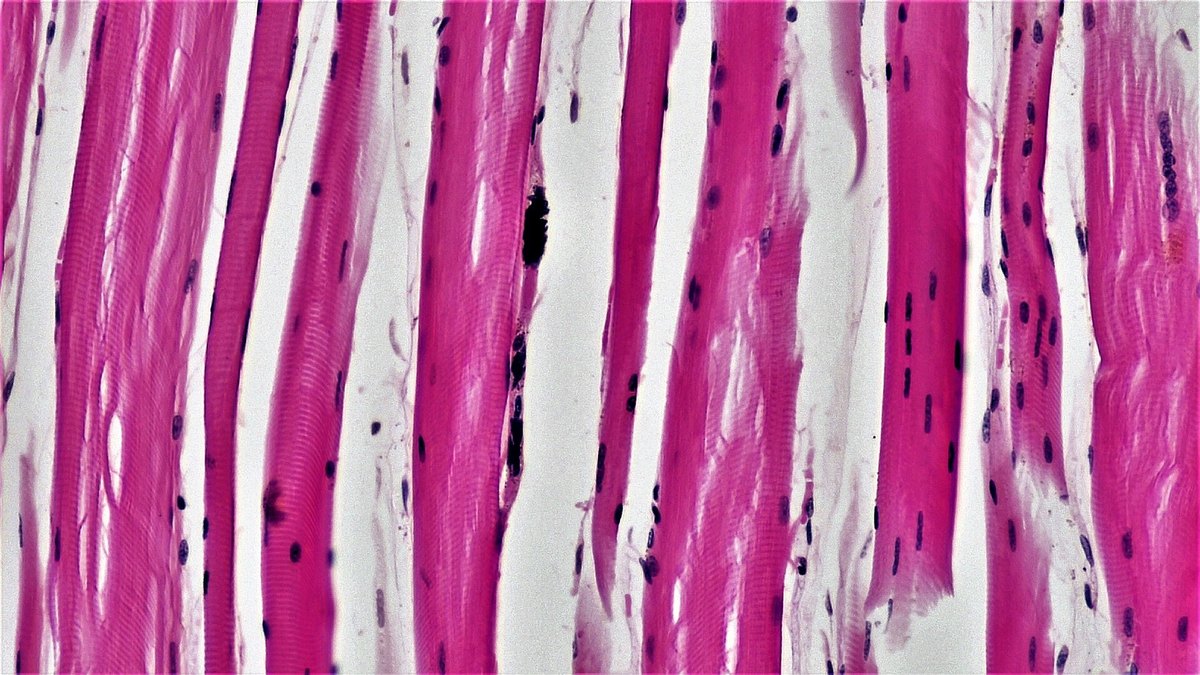
Peptide self-assembly is the spontaneous, template-free process by which many copies of a short designed peptide lock together into ordered filaments, nanofibers and hydrogels. Weak forces — hydrogen bonds, hydrophobic packing, electrostatics — line the peptides up into beta-sheet ribbons that stack into fibres far longer than any single molecule. Because the sequence is written letter by letter, the resulting material can be tuned in stiffness, charge and lifetime. It underpins injectable scaffolds, wound gels and slow-release carriers — and it is a research field at Panacea Bio Chem.
Reading time ~7 min. Covers: what self-assembly is · the molecular grammar of a fibre · the main peptide families · why it matters · the material found by accident · Panacea's angle · where it could matter most.
Most of the materials around us are built: something external cuts, moulds or prints them into shape. Living matter often works the other way. The parts carry the plan inside themselves and fall into place on their own — a soap bubble finding its sphere, a snowflake finding its six arms, a cell membrane closing into a sheet. Chemists call this molecular self-assembly:1 order that appears for free because it is the lowest-energy thing the parts can do.
Peptides — short strings of amino acids, the same alphabet proteins are written in — are unusually good at it. Pick the right sequence, dissolve it, nudge the conditions, and the peptides stop drifting as loose molecules and begin snapping onto one another end-to-end and side-to-side. Within seconds a clear solution can turn into a soft, self-supporting gel laced with billions of nanometre-scale threads. Nothing was added but the peptide and the trigger; the fibre was hiding in the sequence all along.
A single short peptide is floppy and forgettable. The trick is that the right sequence makes each copy a perfect docking partner for the next. Two design languages dominate.
Alternate the amino acids so one face of the extended chain is water-loving and the opposite face is water-fearing — for example the classic EAK16 and RADA16 sequences, built from repeating charged/greasy pairs. In water the greasy faces hide against each other while the chains hydrogen-bond edge-to-edge, zipping into a two-layer beta-sheet ribbon.2 The ribbon grows only along its length, so it becomes a filament nanometres wide and micrometres long. Tangle enough of them and the water is trapped between the threads: a hydrogel that is ~99% water yet holds its shape.
Bolt a greasy lipid tail onto a short peptide head and you get a peptide amphiphile.3 Like soap, the tails flee the water and clump inward while the peptide heads face out — but instead of a round micelle the geometry favours a long cylindrical nanofiber that can be fringed with biological signals on its surface. The same physics that makes a membrane also makes a fibre; sequence decides which.
The fibre was never manufactured. It was encoded — folded out of a sequence the way a paper crane is folded out of a flat square.
Either way the assembly is reversible and switchable. Change the pH, the salt, the temperature, or shear the gel with a syringe, and the fibres can melt apart and reform. That responsiveness is the whole appeal: a peptide gel can be injected as a liquid and set inside the body, or dissolve on cue once its job is done. It is also the whole difficulty — because a structure that assembles on a whim can also fall apart on one.
The field has converged on a small number of recurring design motifs. Each reaches the same destination — a fibre — by a different molecular route.
| Design motif | Well-known example | What it forms | Assembly trigger |
|---|---|---|---|
| Ionic-complementary beta-sheet | EAK16 / RADA16 | Beta-sheet nanofiber → hydrogel scaffold | Added salt screens the charges |
| Beta-hairpin | MAX1 / MAX8 | Folded hairpin fibrillar network | pH or ionic-strength shift |
| Peptide amphiphile | Lipid-tailed IKVAV / RGD peptides | Cylindrical signalling nanofiber | Charge screening / divalent ions |
| Aromatic short peptide | Fmoc-diphenylalanine | Nanotubes & nanofibers | Solvent switch / pH drop |
| Amyloid-inspired | Short beta-forming segments | Cross-beta amyloid-like fibril | Concentration / time |
What unites them is economy: a peptide of six to sixteen residues, a single gentle trigger, and no covalent chemistry — yet the output is a structured material spanning six orders of magnitude in length, from the nanometre chain to the millimetre gel.
Ordinary plastics are made by chopping and mixing bulk polymer; you get little say over what happens at the nanometre scale. A self-assembling peptide flips that. Because the material's smallest unit is a designed sequence, you can program the finished gel's stiffness, surface charge, cell-adhesion signals and even its rate of biodegradation — by editing the amino-acid letters before you ever add water. Design the molecule; the material designs itself.
That has opened a real frontier in biomaterials:
The open problem is control. A structure held together by weak, reversible forces is exquisitely sensitive to its surroundings — and to what happens after it is made. Concentrating it, drying it for storage, warming it in transit, or letting a trace metal or a whiff of oxygen reach a vulnerable residue can all nudge the assembly off course, so the fibre that forms in the vial is not quite the fibre that was designed. Writing a self-assembling sequence is now almost routine; keeping the assembled material intact from the bench to the point of use is the harder, less-solved half.
The field has an origin story that reads like luck. In the early 1990s the biophysicist Shuguang Zhang, working at MIT, was studying an unremarkable yeast protein when he noticed one short, repetitive segment behaving strangely: dropped into salt water, the little peptide — later named EAK16 — spontaneously knitted itself into a stable, self-supporting membrane you could pick up. A fragment of a protein that had nothing obvious to do with structure had built a macroscopic material on its own.4 That accident launched the entire field of designed self-assembling peptides; its descendant RADA16 became a commercial nanofiber scaffold and haemostatic gel.
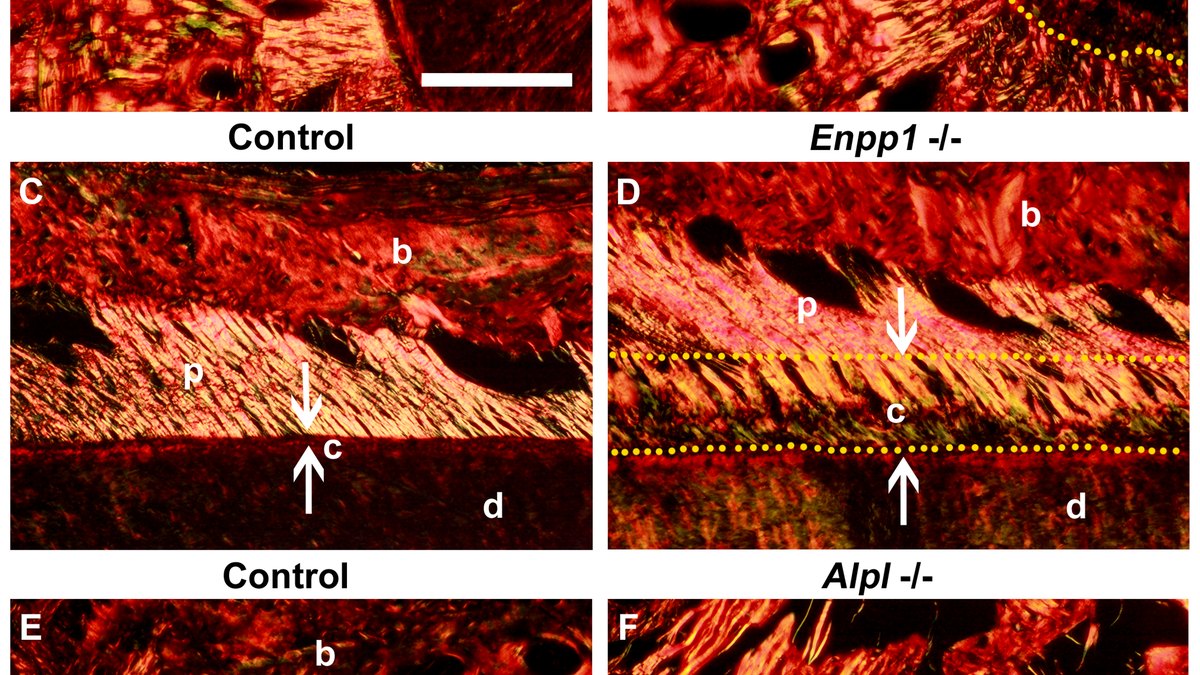
There is a deeper twist. The same cross-beta architecture that makes these useful fibres is the architecture of amyloid5 — the stubborn protein deposits linked to Alzheimer's and other diseases. For decades amyloid was seen only as pathology. Then biologists found nature using the very same self-assembly on purpose: the silk of a spider, the tough anchoring fibres of a barnacle, the "curli" fibres bacteria weave to build their films — all are functional amyloids. Peptide self-assembly, in other words, is a shape nature reaches for again and again, for its strongest natural materials and its most feared diseases alike. Learning to steer it — toward the useful fibre and away from the runaway one — is the science.
Panacea Bio Chem researches this sphere. The company designs peptides and amino-acid chains for a living, and self-assembly sits naturally alongside that work: a designed peptide that is meant to fold itself puts a double demand on the chemistry — the sequence has to encode both the function and the fold. Panacea's focus is that meeting point, and the part of the problem the field finds hardest: keeping an assembled peptide material exactly as designed once it leaves the flask.
That connects self-assembly to the rest of Panacea's work. A fibre held together by weak, reversible bonds is precisely the kind of fragile architecture that drying, warming and oxidation can quietly rearrange — which is why the company's preservation technologies matter here. Cryolapse removes water without the flash-boil shock that can shatter a soft gel; TgShift works on the glass that a dried peptide sets into, so a stored material holds its form; and RedoxVault guards the oxidation-prone residues an assembled fibre depends on. The precise sequences, triggers and process parameters Panacea uses remain proprietary — the outline is public; the recipe stays behind the door.
If the promise of self-assembly is a material you can program, the honest question is where that programmability would relieve the most pain. A few directions look especially worth the work — offered here as open research thinking, not as claims:
Each of these turns on the same hinge: not just designing a peptide that assembles, but keeping the assembly true from synthesis to the moment of use. That hinge is where Panacea Bio Chem concentrates its attention.
What is peptide self-assembly?
It is the spontaneous, template-free
process in which many copies of a short designed peptide lock together into
ordered structures — filaments, nanofibers and hydrogels. Weak forces (hydrogen
bonds, hydrophobic packing, electrostatics) drive identical peptides to align
into beta-sheets that stack into fibres thousands of times longer than the
peptide itself.
What are peptide filaments and nanofibers made of?
Many copies of the
same short peptide, held together by non-covalent bonds rather than one
continuous covalent backbone. The peptides align edge-to-edge into beta-sheet
ribbons, or pack their greasy tails inward as peptide amphiphiles, forming fibres
a few nanometres wide and up to micrometres long that entangle into a gel.
Why does it matter?
It lets researchers build soft biomaterials from
the bottom up — injectable hydrogels, tissue scaffolds, wound and haemostatic
gels, slow-release carriers — with stiffness, charge and lifetime tuned by
editing the sequence, a control ordinary polymers do not offer.
Who is behind this page?
Panacea Bio Chem Ltd, the peptide science
company founded by Bogdan Dicoias, which researches peptide self-assembly
and the preservation of assembled peptide materials.
Recent developments in the field — refreshed 2026-09-02 by Panacea Bio Chem.
The Panacea Technology Universe
Proprietary Panacea Bio Chem Ltd technologies, invented by Bogdan Dicoias — what each one does, and why it leads its class.
 Lyoprester®The only dual-chamber cartridge that is autoreconstitution-enabled, vacuum-sealed and argon-fillback.lyoprester.com ↗
 P-EARLs™Panacea-Engineered Aseptic Reconstitution Liquid(s) — each tuned to the peptide it wakes.p-earls.com ↗
 Peptourbillon™The layered peptide formulation architecture — single- or multi-layer, never a blend.peptourbillon.com ↗
 RF Tunnel™The RF-formed central channel through the cake.rftunnel.com ↗
 TgShift™Raises the cake’s glass-transition temperature with RF — instead of chilling below it.tgshift.com ↗
 Cryolapse™Cryogenic pressure collapse under S3Pulse™ control — vapour redistributed through the whole cake, not its surface, impeding crust formation.cryolapse.com ↗
 LyoLevit™The cake levitates and spins in high orbit — driven by ultrasound and RF.lyolevit.com ↗
 Lyochrysalis™The integrated chamber housing the whole drying stack.lyochrysalis.com ↗
 S3Pulse™The control brain for every piece of Panacea hardware.s3pulse.com ↗
 Liquiprester™The single-liquid cartridge engineered so multiple peptide APIs coexist in one shared vehicle.liquiprester.com ↗
 Syntheseract™Continuous-flow peptide synthesis in a special, very fast and economical way.syntheseract.com ↗
 CFSPPS™Continuous-flow solid-phase peptide synthesis, written as its own category.cfspps.com ↗
 OxyDeplete™Degassing plus no-headspace doctrine — the oxygen-starved seal.oxydeplete.com ↗
 ArgonLock™The final inert-atmosphere lock under argon.argonlock.com ↗
 RedoxVault™Separation, not merely suppression — redox isolation in lipid micro-reservoirs.redoxvault.com ↗
 PleniDose™The shared filling gantry — one machine filling both the dual-chamber Lyoprester and the liquid Liquiprester.plenidose.com ↗
 IncreSure™The dose-metrology layer — verified API per pen increment.incresure.com ↗
 ElimiVoid™Front-void elimination without touching the metered dose.elimivoid.com ↗
 Cryoviscous™The characterised cold, high-viscosity, low-mobility conditioning state.cryoviscous.com ↗
 Vana Machine™Vacuum Assisted Needle Accessory — vacuum conditioning and plunger-locking for the cartridge.
 EZnject™The disposable auto-injector pen built around the Lyoprester.panaceaeznject.com ↗
 Dicoias ΨThe computed-chemistry advisory — every substance reduced to a vector across physical, electronic and formulation space.dcppsi.com ↗
 SealoPrester™Aseptic Cartridge Closure System — Seal o’ Precision + Sterility.sealoprester.com ↗
 Peptidic LiquidThe peptide formulation in solution — the active plus its buffers, cryoprotectants, lyoprotectants and scaffolders.peptidicliquid.com ↗
 DiastolVAC™Biomimetic diastolic vacuum control — the pneumatic circulatory system of the machine: pumps, valves and sensors as one ensemble.diastolvac.com ↗
The publications indexed in PubMed in the last 30 days for "beta-sheet fibrils" OR "RADA16" already appear in Trending above — the next most recent in the field, refreshed weekly.